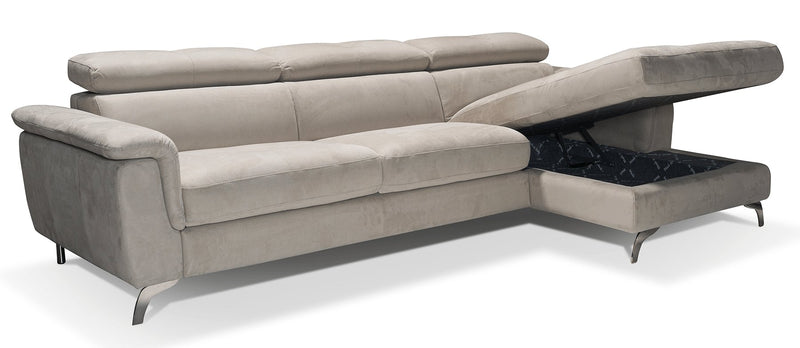
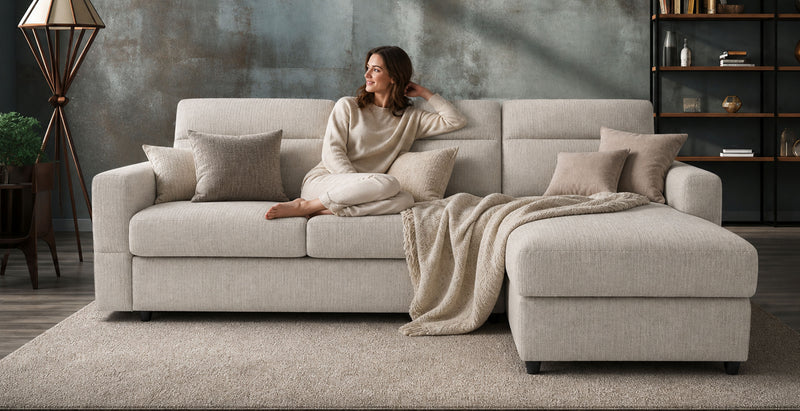
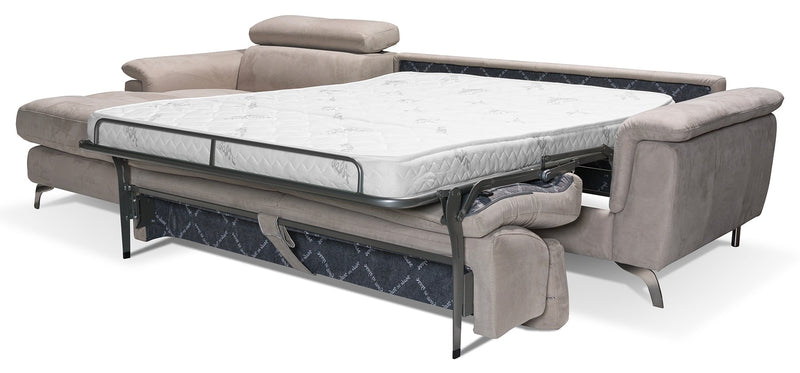
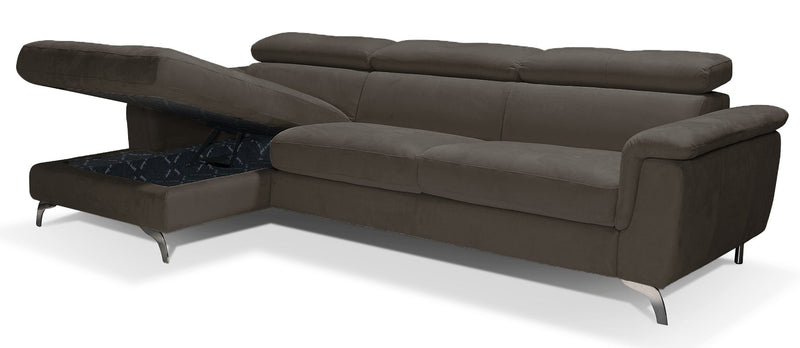
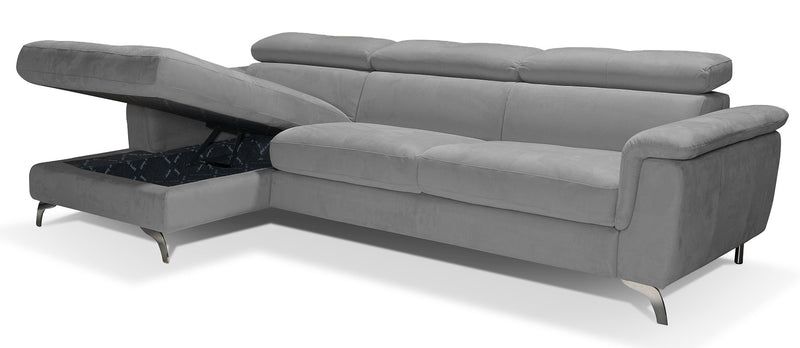
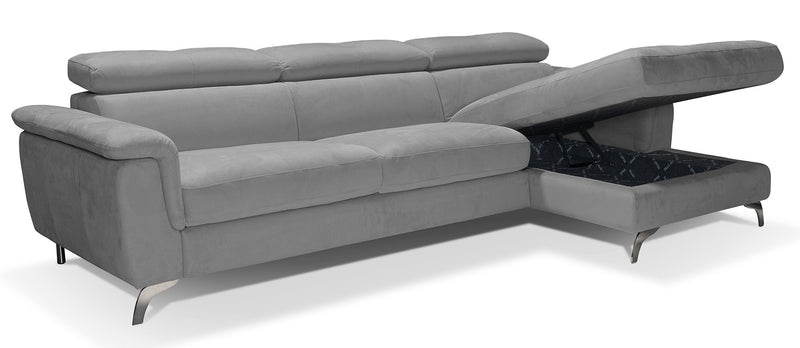
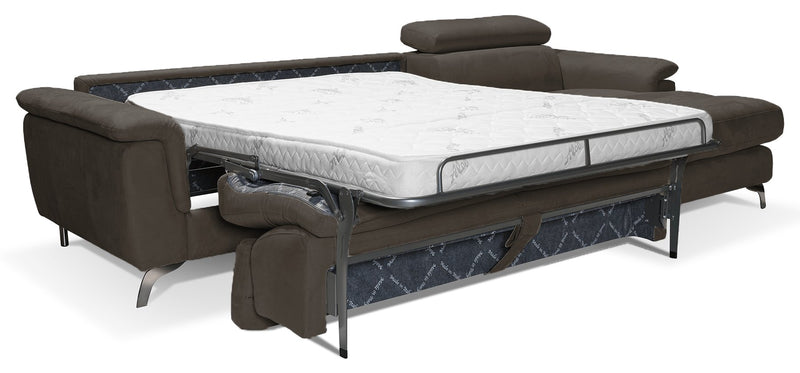
The vintage convertible corner sofa combines the charm of retro furniture with the practicality of a sofa designed for modern interiors. Its lines inspired by past decades, warm colors, and textured materials allow it to become a real statement piece in the living room, while offering an extra bed when you need one.
Mustard, olive green, terracotta, brown, deep blue, velvet, or even corduroy: vintage style offers many possibilities for personalizing your decor. Thanks to its corner format, the sofa also allows you to comfortably organize the living space while combining several functions in a single piece of furniture.
What is a vintage convertible corner sofa?
A vintage convertible corner sofa incorporates the main aesthetic codes of retro furniture while integrating a convertible function. It stands out for its shapes, colors, materials, and decorative details inspired notably by the 50s to 70s.
Shapes inspired by retro furniture
The lines of the vintage corner sofa can recall the characteristic silhouettes of furniture from past decades: generous volumes, enveloping seats, structured backrests, or elaborate armrests.
Depending on the model, the legs can be visible, slightly angled, or inspired by the typical shapes of furniture from the second half of the 20th century. These details help give the sofa a strong visual identity.
The corner format, meanwhile, allows you to maintain this retro aesthetic while meeting the needs of a contemporary living room. The sofa can thus become the focal point of the room without giving up its convertible functionality.
Colors emblematic of vintage style
Color is one of the most recognizable elements of vintage decor. Mustard, olive green, terracotta, brown, or deep blue shades notably allow you to create an atmosphere inspired by retro interiors.
For a more discreet approach, beige, ecru, gray, or camel shades can take up some vintage codes while remaining easy to match with contemporary decor.
The color of the sofa then plays an essential role in the atmosphere of the living room. A deep shade can give more character to the room, while a lighter shade allows you to maintain a bright look.
Materials that enhance the character of the sofa
Materials also contribute to the identity of a vintage convertible corner sofa. Velvet is particularly appreciated for its touch and its reflections, while corduroy brings a visual relief that readily recalls the 70s vibes.
Slightly textured fabrics also allow you to create a more subtle retro aesthetic. They can be combined with wooden elements, notably at the level of the legs or the surrounding furniture.
The combination of wood, textured textiles, and characteristic colors thus allows you to build a coherent vintage decor without necessarily multiplying antique objects.
Why choose a vintage convertible corner sofa?
The vintage convertible corner sofa allows you to bring together aesthetics, conviviality, and functionality in a single piece of furniture. It constitutes an interesting solution for those who wish to bring a strong identity to their living room while retaining the possibility of having an extra bed.
A sofa that adds character to the decor
A vintage sofa can quickly become the central piece of the living room. Its color, its silhouette, and its upholstery naturally attract the eye and allow you to personalize the space.
Rather than choosing entirely standardized furniture, vintage style offers the possibility of creating a more unique decor. A mustard, olive green, or deep blue sofa can, for example, become the starting point for the entire color palette of the room.
The corner sofa also brings an important presence to the living room thanks to its volume and its configuration, which allows you to naturally structure the space.
A warm and convivial style
Warm colors and soft materials contribute to creating a welcoming atmosphere. Velvet, corduroy, and textured fabrics reinforce this impression by bringing relief and a warmer dimension to the layout.
Combined with wood, soft lighting, and a few carefully chosen accessories, the vintage sofa can create a convivial living room while maintaining a contemporary aesthetic.
A convertible sofa adapted to everyday life
Beyond its aesthetics, the convertible corner sofa meets practical needs. Its format allows you to offer several seats while integrating an extra bed.
To discover a selection adapted to different styles and configurations, check out our collection of corner convertible sofas.
The sofa thus combines the charm of retro furniture with contemporary uses: entertaining, relaxing, watching a movie, or occasionally hosting a guest.
Which vintage corner sofa to choose according to your living room?
The choice of a vintage corner sofa depends mainly on the available surface, the number of seats desired, and the importance given to the bed. The proportions of the sofa must be adapted to the room to maintain pleasant circulation.
A compact sofa for a small living room
In a small living room, favor proportions adapted to the available surface. A sofa that is too bulky can quickly reduce circulation areas and give an impression of a cluttered space.
The color must also be chosen according to the brightness. In a poorly lit room, a lighter shade can help maintain a balanced atmosphere, while a deep vintage color can be used as a strong decorative element in a sufficiently bright space.
Finally, remember to check the dimensions of the sofa when it is transformed into a bed. The space required for opening must be compatible with the configuration of the room.
A large corner sofa for a living area
In a spacious living room, a large corner sofa can become the real center of the room. The number of seats should then be chosen according to the household and entertaining habits.
The chaise longue can also provide an extra space to sit comfortably and reinforce the convivial side of the layout.
Depending on the number of seats desired, you can notably compare a 4-seater convertible corner sofa, a 5-seater convertible corner sofa or a 6-seater convertible corner sofa.
Even in a large room, it is preferable to maintain enough space around the sofa to facilitate circulation and the use of the bed.
Fixed sofa or convertible: which model to choose?
The choice between a fixed sofa and a convertible sofa depends mainly on the desired use. A fixed model essentially meets a need for seating and relaxation, while a convertible adds the possibility of having a bed.
This additional function is particularly interesting for hosting loved ones without installing a permanent bed in the living room. It allows you to keep the room as a living space while having a sleeping solution when necessary.
If the bed is used regularly, pay special attention to comfort, the mattress, and the mechanism. You must also check the space required once the sofa is unfolded.
How to integrate a vintage corner sofa into your decor?
To succeed with a decor around a vintage corner sofa, the goal is to take up a few retro codes while maintaining a balanced overall look. Colors, wood, textiles, and accessories can be enough to create a vintage atmosphere without turning the living room into an entirely retro set.
What colors to match with a vintage sofa?
Neutral colors like beige and ecru allow you to balance a sofa with strong shades. They create a bright base around a mustard, olive green, or terracotta sofa.
To reinforce the retro spirit, these colors can be combined with brown, camel, or woody shades. A deep blue can, meanwhile, bring more contrast while maintaining a certain elegance.
The ideal is to limit the number of dominant colors to maintain a harmonious decor.
What furniture to match with a vintage sofa?
Wood is particularly suited to vintage decor. A light or dark wood coffee table can notably complete the sofa and recall the codes of furniture from the 50s to 70s.
You can also choose furniture with slightly retro lines without necessarily seeking an entirely antique decor. A few elements inspired by this period can be enough to give an identity to the room.
Metal and glass can be used in small touches to bring a more contemporary dimension and avoid an overly uniform decor.
What accessories to complete a vintage decor?
Accessories allow you to reinforce the atmosphere without changing the main elements of the living room. A patterned or warm-toned rug can visually frame the sofa area.
Textured cushions, retro-shaped lighting fixtures, posters, mirrors, or a few decorative objects inspired by past decades can also complete the set.
To maintain a balanced decor, however, avoid accumulating too many vintage references. A few well-chosen pieces are often enough to create a coherent atmosphere.
What upholstery to choose for a vintage corner sofa?
The upholstery plays an essential role in the visual identity of the sofa. It influences its touch, its appearance, and the way it integrates into the decor. The choice must therefore take into account both the desired style and the usage constraints.
Velvet to accentuate the retro spirit
Velvet is a material particularly suited to vintage decor. Its touch and its reflections can give more depth to the sofa and slightly change its appearance depending on the light.
Deep or warm shades notably allow you to reinforce its retro inspiration. An olive green, a deep blue, a terracotta, or a mustard can thus become a real decorative element.
Corduroy to bring relief
With its visible ribs, corduroy brings an immediately recognizable texture. It gives more character to the sofa and naturally integrates into a decor inspired by the 70s.
Combined with wood, warm colors, and a few retro accessories, it can contribute to creating a particularly marked vintage atmosphere.
Fabric for a more discreet vintage style
Fabric constitutes a more sober alternative. A solid or slightly textured model can take up vintage codes mainly thanks to its color and its silhouette.
This solution is interesting when you wish to integrate a few retro references into a more contemporary decor. The sofa can then maintain a contemporary appearance while bringing a vintage touch thanks to its shade, its legs, or its proportions.
How to arrange your living room around a vintage corner sofa?
The layout must allow the sofa to play its role as a central piece while retaining enough space to circulate and use its convertible function.
Where to position the sofa?
The position of the sofa depends on the configuration of the living room. It can serve to naturally delimit the living room area in a large room or be installed against a wall in a smaller space.
The direction of the chaise longue must also be taken into account. It is preferable to choose an orientation that facilitates circulation and corresponds to the layout of the other furniture.
Finally, plan enough space around the sofa to prevent its opening in the sleeping position from being hindered by a table, a piece of furniture, or another decorative element.
How to choose the coffee table and the rug?
A wooden or glass coffee table, or one with rounded shapes, can effectively accompany a vintage sofa. Its dimensions must, however, remain proportional to those of the sofa and the surface of the living room.
The rug can take up some colors present on the sofa to create a visual link. The patterns can also recall the retro aesthetic, provided you do not multiply strong prints.
In a small space, the dimensions of the rug and the coffee table must be carefully studied to preserve circulation areas.
How to create a vintage decor without overloading it?
A successful vintage decor does not require accumulating retro furniture and objects. A few well-chosen references can be enough to give character to the room.
You can notably mix a vintage-inspired sofa with contemporary elements. This combination allows you to create a more balanced interior and avoid the "period set" effect.
Also limit the number of strong colors and make sure to maintain consistency between the different materials, the furniture, and the accessories.
How to maintain a vintage corner sofa?
The maintenance of a vintage corner sofa depends mainly on its upholstery. Regular and adapted actions allow you to preserve its appearance and limit the premature wear of the different surfaces.
Daily maintenance actions
Regular dusting or vacuuming allows you to remove the dust accumulated on the upholstery. The maintenance method must then be adapted to the fabric, the velvet, or the corduroy.
In case of a stain, act quickly using a method compatible with the material. It is preferable to follow the manufacturer's recommendations rather than applying a product without checking its suitability with the upholstery.
How to preserve the upholstery over time?
Respect the maintenance recommendations specific to the sofa. Direct and prolonged exposure to the sun can notably be limited when the upholstery is sensitive to light.
It is also preferable to regularly maintain the different areas of the sofa to maintain a homogeneous appearance. The most used parts can indeed require special attention.
Errors to avoid during cleaning
Avoid aggressive products that could alter the upholstery. It is also not recommended to over-moisten the fabric or the velvet when the material does not allow it.
Before using a maintenance product, test it on an inconspicuous area. This precaution allows you to check its effect on the material and avoid an unpleasant surprise on a highly exposed part of the sofa.