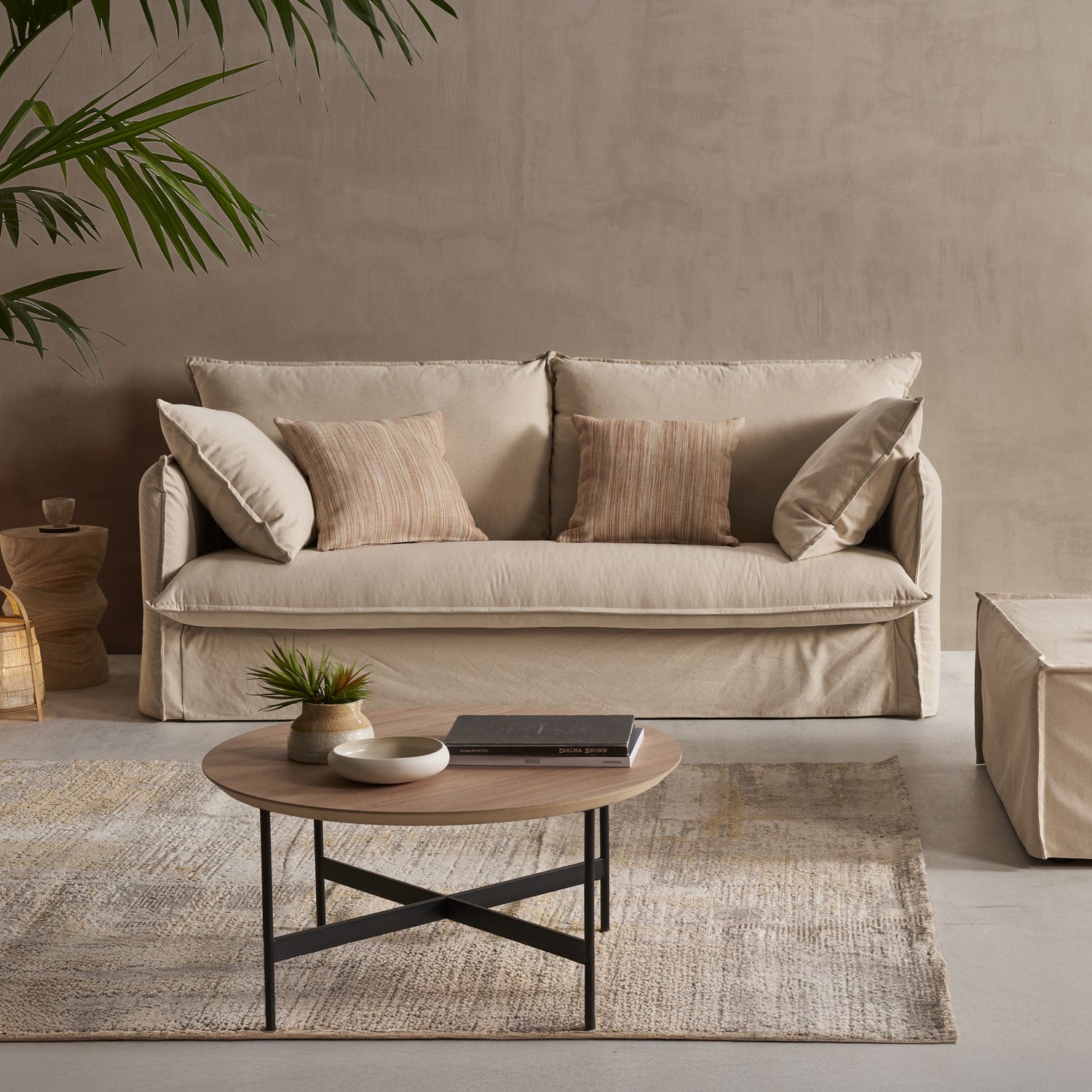
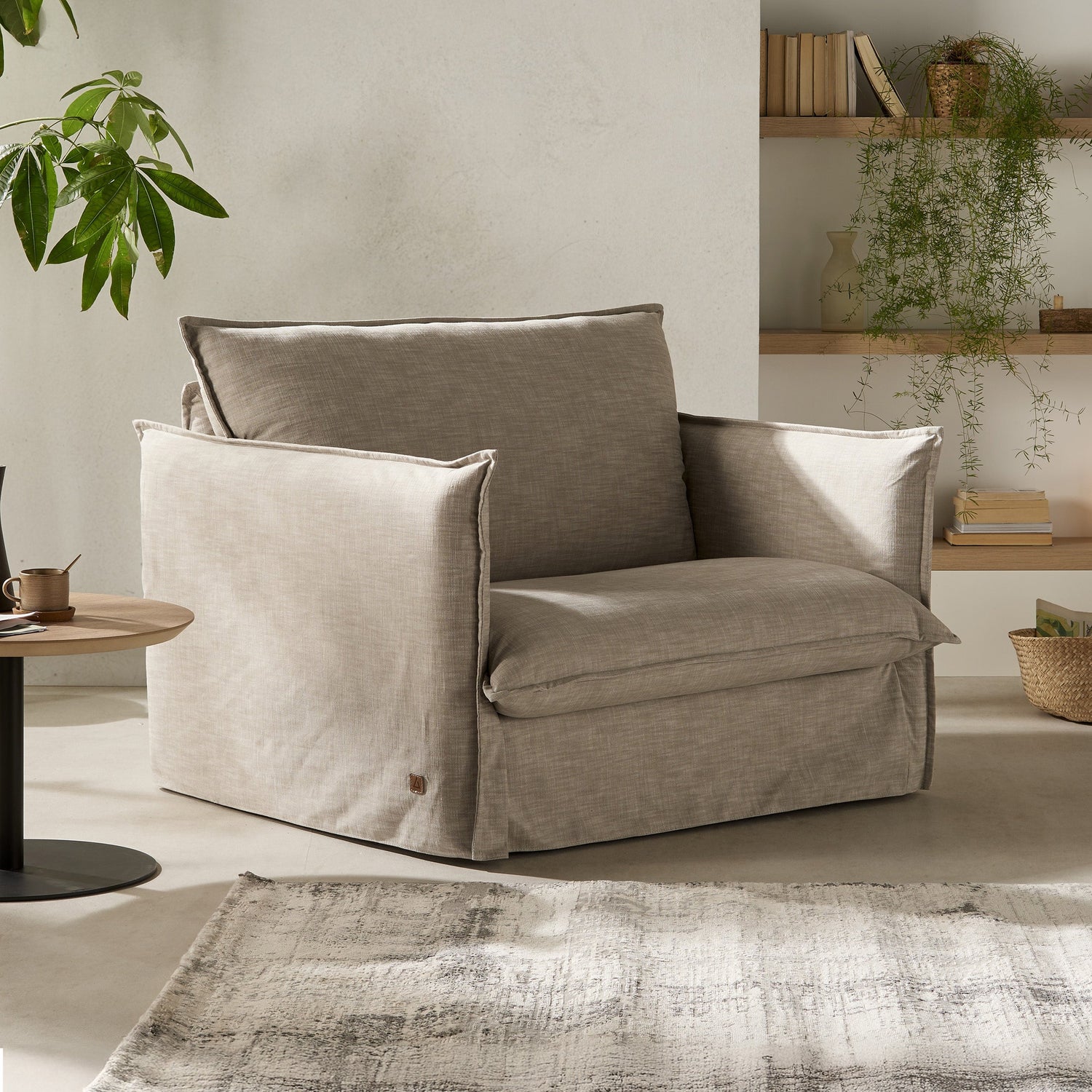
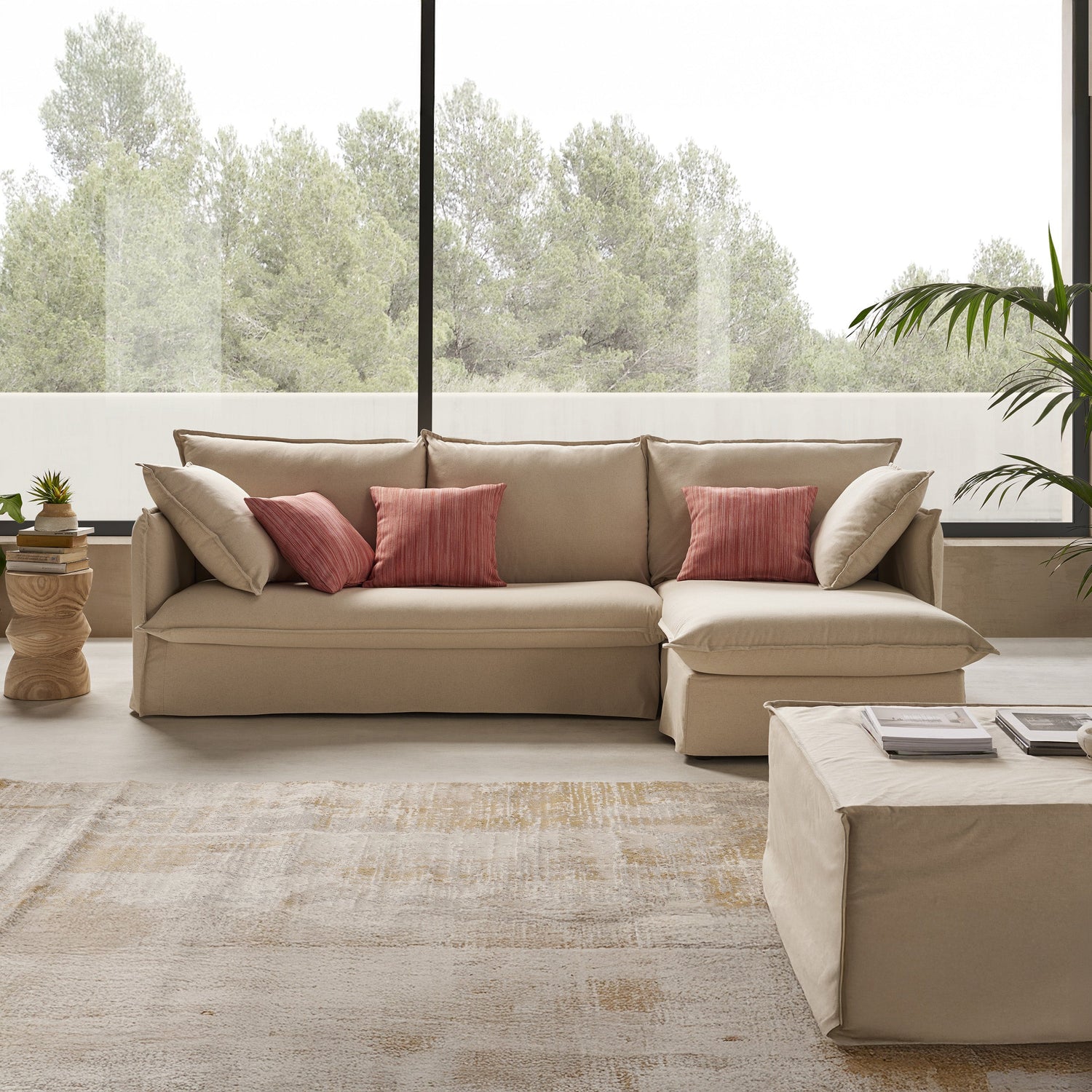
When square footage is limited, every piece of furniture must find its place without cluttering the room. A small corner sofa meets this challenge particularly well: it allows you to enjoy generous seating while making the most of a living room corner.
In a convertible version, it offers an additional functional benefit by directly integrating a bed. Whether it's a studio, a small apartment, a guest room, or a multi-purpose space, a small convertible corner sofa makes it possible to combine several uses in a reduced area.
Dimensions, chaise lounge, bed, armrests, or even the opening mechanism: here are the elements to consider to enjoy a corner sofa without necessarily having a large living room.
Why choose a small corner sofa?
We sometimes associate corner sofas with large living rooms. However, some models with more compact dimensions can perfectly fit into a small space.
Their main advantage lies in their configuration. The chaise lounge exploits a part of the room that might be difficult to furnish with several independent pieces of furniture.
Rather than installing a sofa accompanied by an armchair or an ottoman, a small corner sofa creates multiple seats within a single piece of furniture.
It can also help visually structure the space, especially in a living area that combines a lounge, dining room, and kitchen.
Small convertible corner sofa: two functions combined
In a studio or an apartment with few rooms, the ability to transform your sofa into a bed represents a real advantage.
A small convertible corner sofa allows you to maintain a lounge area during the day and then have a bed ready when needed.
It can meet various needs: hosting loved ones occasionally, setting up a guest room, or having your own bed in a studio.
For regular use, however, you should pay special attention to the mattress and the convertible sofa's mechanism.
How to integrate a small corner sofa into a studio?
In a studio, the sofa often takes up a significant amount of space in the overall layout. Its dimensions should therefore be studied in relation to the entire room, not just the space available against a wall.
Exploiting a corner of the room
Installing the sofa in a corner helps clear more of the central part of the living area.
For example, the chaise lounge can be placed along a wall to limit its impact on traffic flow areas. This arrangement helps maintain more fluid movement around the sofa.
Defining the lounge area
In an open-plan room, a small corner sofa can also serve to naturally identify the area dedicated to the lounge.
Depending on the layout of the home, the chaise lounge can create a visual separation between different zones without requiring the addition of a partition or other furniture.

What dimensions for a small corner sofa?
The term "small corner sofa" does not refer to a single size. The important thing is to choose proportions consistent with the surface area and layout of the room.
Before purchasing, measure the width available against the wall, as well as the depth required to accommodate the chaise lounge.
In the case of a small convertible corner sofa, an additional measurement is essential: the space occupied when the bed is fully open.
In particular, you must ensure there is enough room to walk around and unfold the sofa without moving a large portion of your other furniture.
A simple trick is to mark out the dimensions of the future sofa directly on the floor before buying. This allows you to better visualize its actual footprint in the room.
Reversible chaise lounge: an advantage in small spaces
The orientation of the corner is particularly important when space is limited.
A reversible chaise lounge allows you to change its orientation so it can be installed on the right or left, depending on the room's layout.
This flexibility can be useful when your layout evolves, but also during a move: the sofa can more easily adapt to a new arrangement.
Before choosing your small corner sofa, remember to check whether the chaise lounge is fixed or reversible.
Small corner sofa: the details that save space
A few centimeters can make a real difference in a small room. Beyond the stated dimensions of the sofa, certain design elements are worth observing.
Thin armrests
Two sofas offering a similar seating surface can have very different total widths.
Thin armrests allow for more seat width without unnecessarily increasing the sofa's overall footprint.
A well-proportioned chaise lounge
A chaise lounge provides extra seating and allows you to stretch out, but its depth must remain consistent with the room.
In a narrow space, you must verify that it does not block a traffic zone or access to other furniture.
Storage space when the model offers it
On some corner sofas, storage space can be integrated under the chaise lounge or in another part of the structure.
In a studio or a small apartment, this functionality provides additional storage without adding a dedicated piece of furniture.
What kind of bed should you choose for a small convertible corner sofa?
If the sofa is convertible, the choice of bed depends primarily on how often it will be used.
Hosting guests occasionally requires different needs than someone sleeping on their sofa every night.
For daily sleeping, it is preferable to look at the thickness and support of the mattress, as well as the ease of opening the mechanism.
At Convertible Center, several mattress ranges allow you to adapt the bed to its use, whether occasional or daily.
The EXPRESS system, for instance, allows you to transform the sofa into a bed without removing the seat and back cushions. A feature that is particularly practical when opening and closing is part of your daily routine.

Design also matters in a small room
Choosing a small corner sofa does not necessarily mean looking for the most discreet model possible.
In a small area, the sofa occupies a significant visual space. Its upholstery, volumes, and lines therefore contribute directly to the room's atmosphere.
Tweed, textured velvet, neutral tones, or bolder colors: the choice depends primarily on the style you are looking for.
The model's proportions, however, remain essential. Thinner armrests and a structure with clean lines can, for example, visually lighten a corner sofa in a room with reduced dimensions.
Small convertible corner sofa: criteria to check before buying
Before choosing your sofa, several features can help verify that it truly matches your space and usage:
- the total dimensions of the sofa;
- the depth and orientation of the chaise lounge;
- the footprint of the bed once opened;
- the width of the armrests;
- the type of convertible mechanism;
- the mattress and its recommended usage frequency;
- the potential presence of storage space.
Beyond dimensions, comfort is personal. Coming to try different models in-store allows you to compare seats, backrests, and mattresses before making your choice.
Furnishing a small space without giving up the corner sofa
A small corner sofa allows you to enjoy the user-friendly configuration of a sofa with a chaise lounge, even when available space is limited.
In a convertible version, it also becomes an attractive solution for adding a bed without installing an additional bed in the room.
The key is to choose appropriate dimensions, consider traffic areas, and, for a convertible model, anticipate the space needed for it to open.
With a well-thought-out configuration, a small corner sofa can find its place in a studio, an apartment, or a guest room, while keeping the space pleasant to live in.