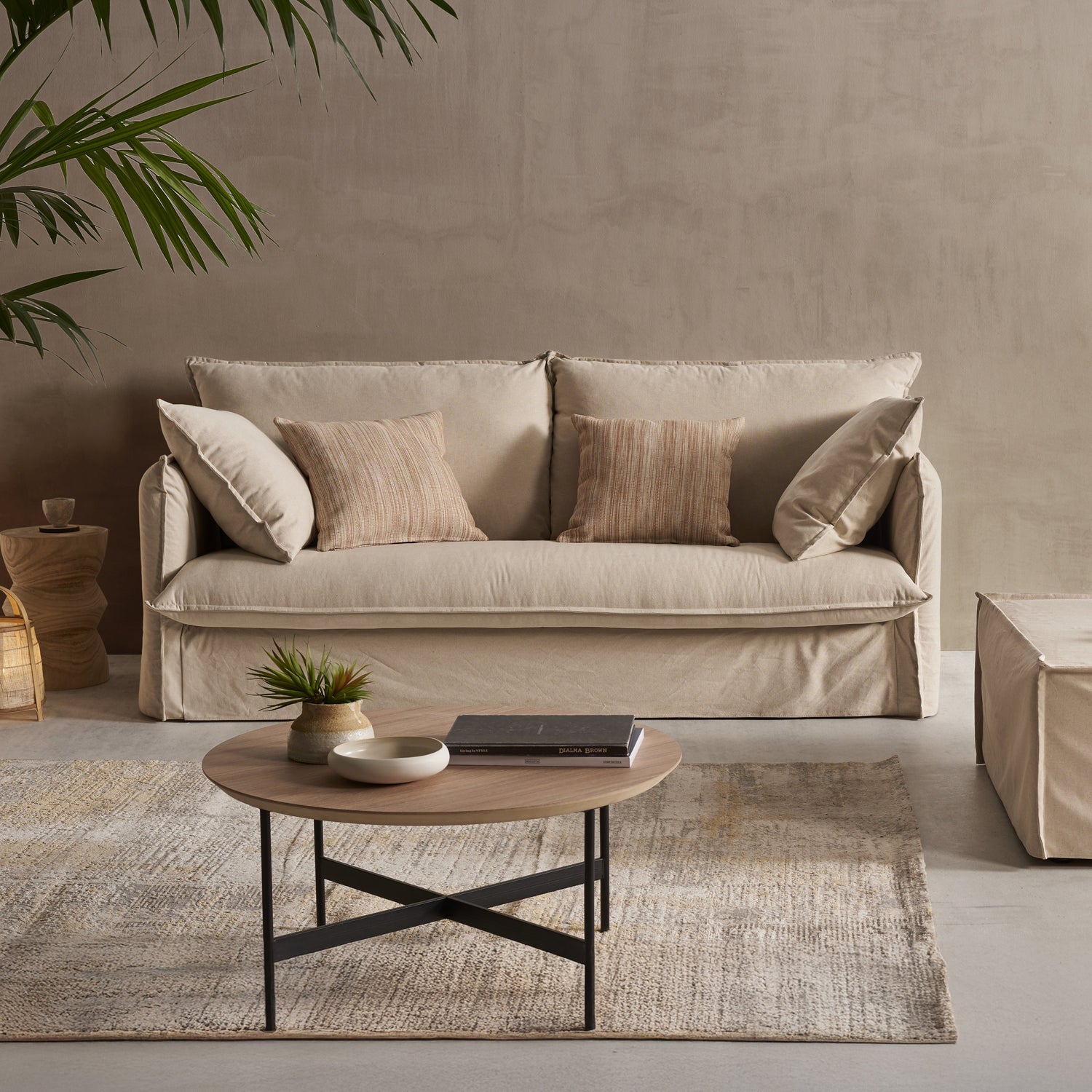
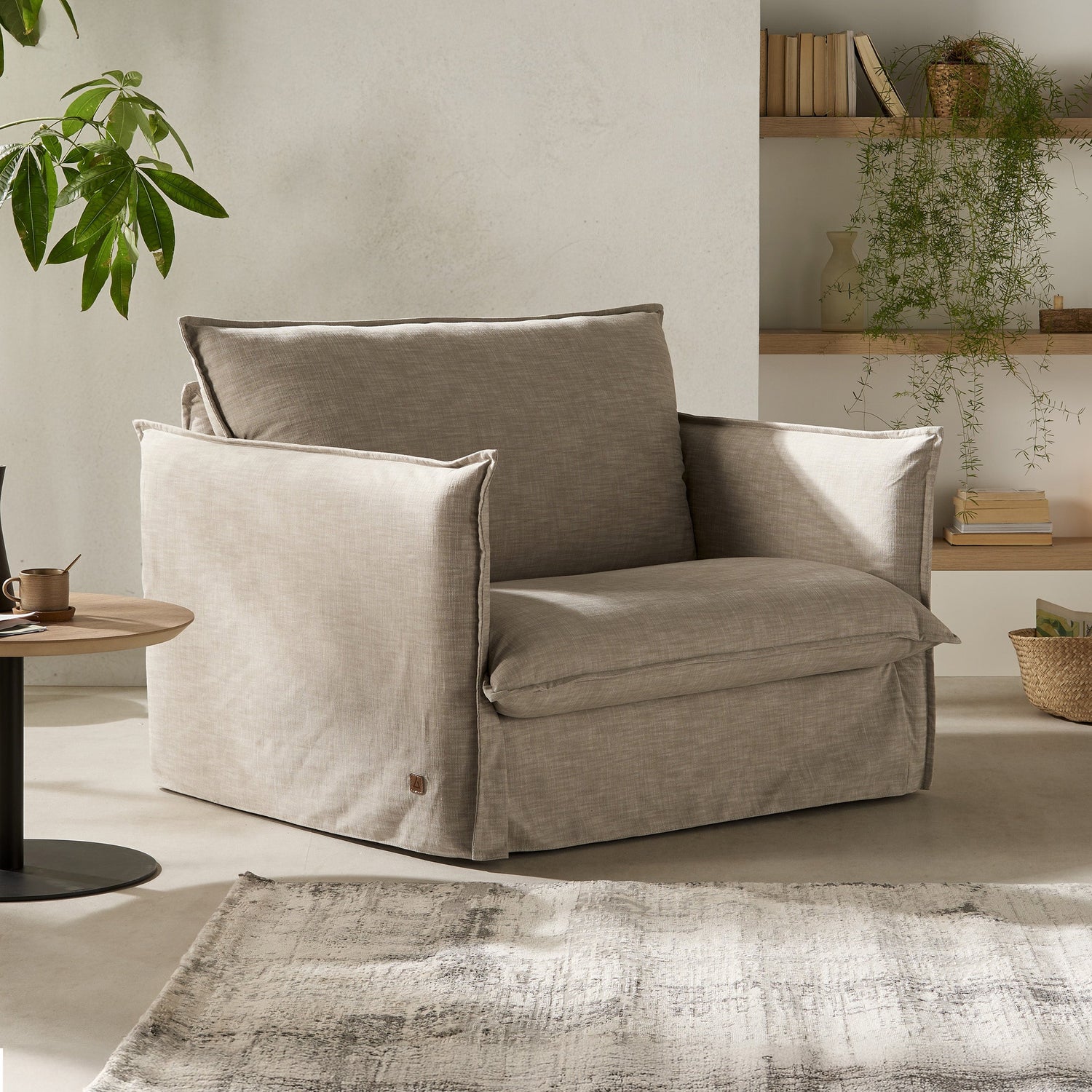
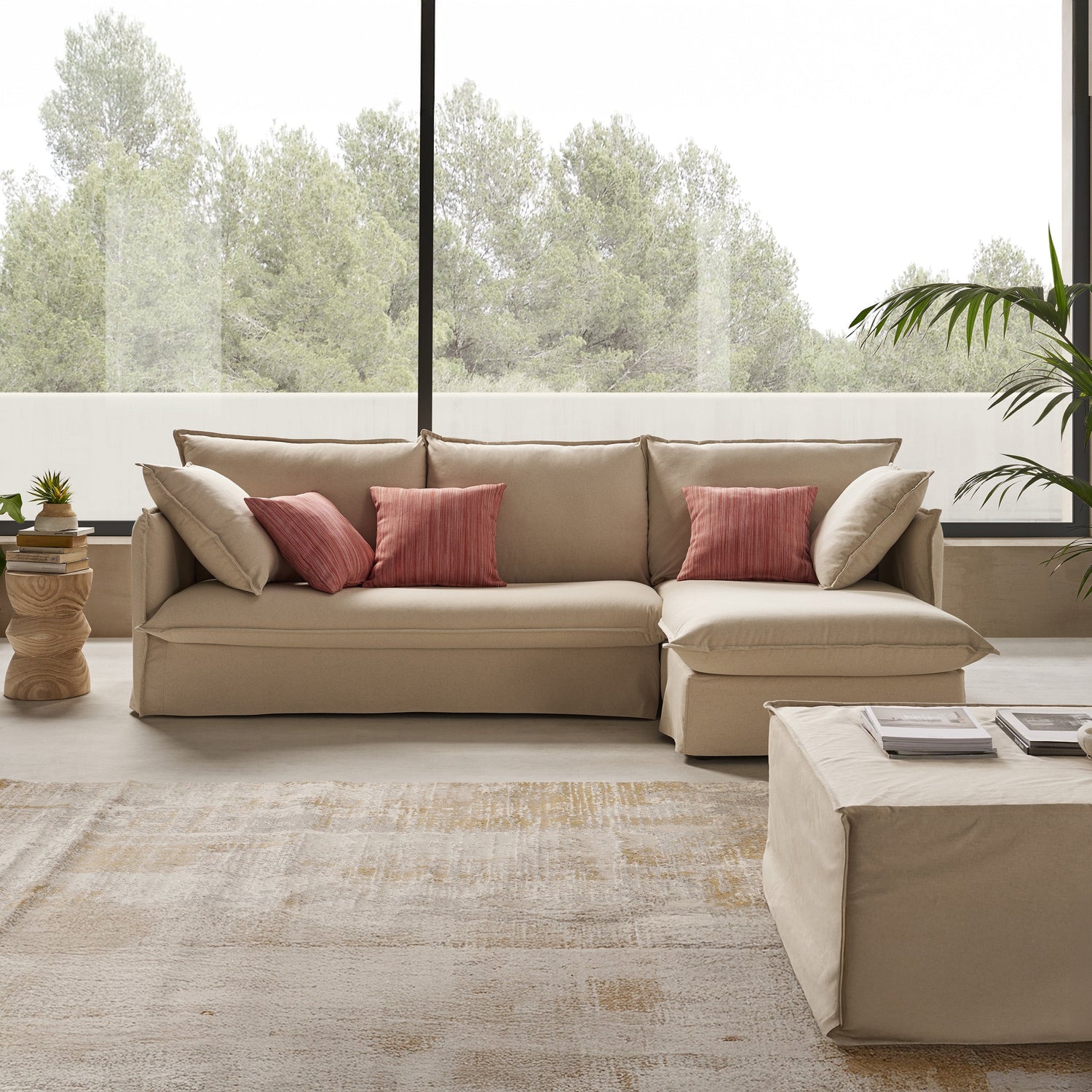
The orange sofa is making a comeback in our interiors. Whether terracotta, rust, burnt orange, or a brighter shade, it adds warmth to the living room and allows you to introduce color without having to redo your entire decor.
But once you have chosen the sofa, you still need to know what to pair it with. Wall color, rugs, furniture, materials… Here is how to incorporate an orange sofa into your living room and create a harmonious ensemble.
Why choose an orange sofa?
The sofa occupies an important place in the living room. Choosing it in a color like orange therefore immediately gives a different identity to the room.
And contrary to what one might think, orange is not limited to retro interiors. It all depends on the shade chosen.
A burnt orange or a terracotta sofa brings a fairly soft, warm touch. Rust shades lean more towards natural tones, while a more direct orange gives a more colorful result.
This diversity allows the orange sofa to be adopted just as well in a contemporary interior as in a Mediterranean, vintage, or more minimalist decor.

What colors to pair with an orange sofa?
Orange may seem difficult to match at first glance. However, several palettes work particularly well with this color.
Beige and ecru for bright decor
Beige, ecru, off-white, or even sand help soften the presence of an orange sofa.
These shades can be used on walls, curtains, or rugs to create a fairly neutral base. The sofa then provides the room's main color without the whole look feeling too busy.
This combination works particularly well with a terracotta or rust orange sofa.
Green to play with natural tones
Olive green, khaki, or sage green go naturally with orange hues.
The combination can remain subtle: a few cushions, an armchair, decorative objects, or plants are enough to introduce green into the room.
With wood and natural materials, this palette makes it possible to create a warm living room without multiplying the colors.
Blue to create more contrast
For decor with more contrast, orange can also be paired with blue.
Petroleum blue or midnight blue, for example, can be used in small touches on a rug, cushions, or certain furniture elements.
The idea is not necessarily to distribute the two colors equally. The sofa can remain the main element, while blue is introduced sparingly to create contrast.
Which materials to choose around an orange sofa?
The color of the furniture is not the only element to take into account. The materials present in the room can completely change the atmosphere created around an orange sofa.
Wood is probably one of the simplest pairings. A light wood helps keep an interior bright, while a darker wood, like walnut, can give the room a more retro inspiration.
For a more contemporary result, a coffee table in stone, travertine, or glass can provide an interesting contrast.
Regarding textiles, linen, wool, or textured fabrics allow for adding depth without needing to introduce numerous additional colors.

How to decorate your living room around an orange sofa?
With a colorful sofa, it is not necessary to accumulate decorative elements.
Quite the contrary, sober decor allows the sofa's color to integrate better into the room.
You can, for example, pair it with:
- a beige, ecru, or cream rug;
- a wooden, stone, or glass coffee table;
- cushions in neutral or natural shades;
- light curtains;
- a few green, brown, or terracotta elements.
There is also no need to match the sofa's color exactly elsewhere in the living room. A palette composed of complementary or more neutral shades generally produces a more balanced result.
What wall color goes with an orange sofa?
A white or off-white wall remains a simple solution to showcase an orange sofa while maintaining plenty of brightness.
To warm up the room even more, beige, sand, or cream tones also work very well.
It is also possible to lean further into the color with an olive green, khaki, or brown wall. These combinations are particularly suitable for burnt orange, rust, or terracotta sofas.
Before choosing a dark color, however, you must take into account the light and the size of the room. In a small, dimly lit living room, light walls generally help maintain a sense of space.
What style of orange sofa should you choose?
The shape of the sofa counts as much as its color.
An orange sofa with rounded shapes will easily find its place in a contemporary interior composed of soft lines and natural materials.
Visible legs, straighter lines, or certain geometric shapes, on the contrary, can evoke the interiors of the 60s and 70s.
The upholstery also influences the result. An orange velvet sofa plays more with light and gives more depth to the color. A matte or textured fabric offers a different finish and can make an orange shade more subtle.
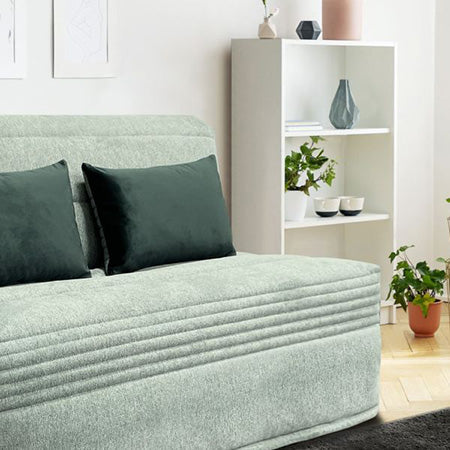
For a room that also needs to accommodate guests, the orange sofa bed allows you to combine a more original color with the presence of a real bed.
Can you put an orange sofa in a small living room?
A colorful sofa is not reserved for large rooms.
In a small living room, the most important thing is not to overload the rest of the layout. Light walls, a rug in natural tones, and a few pieces of furniture with simple lines allow the room to breathe better.
The color can even become a way to give character to a small space with relatively few elements.
In a studio or apartment where every square meter counts, a compact sofa bed also makes it possible to combine seating and sleeping in a single piece of furniture.

The orange sofa, an easy color to personalize
Ultimately, an orange sofa can head in very different directions depending on the elements that surround it.
Paired with beige, ecru, and light wood, it integrates into soft, bright decor. With olive green, brown, or darker wood species, the atmosphere becomes warmer. Touches of blue, on the contrary, create more contrast.
The choice of shade also plays an important role. Terracotta, rust, burnt orange, or a brighter orange help to find a different balance depending on the desired style and the colors already present in the living room.