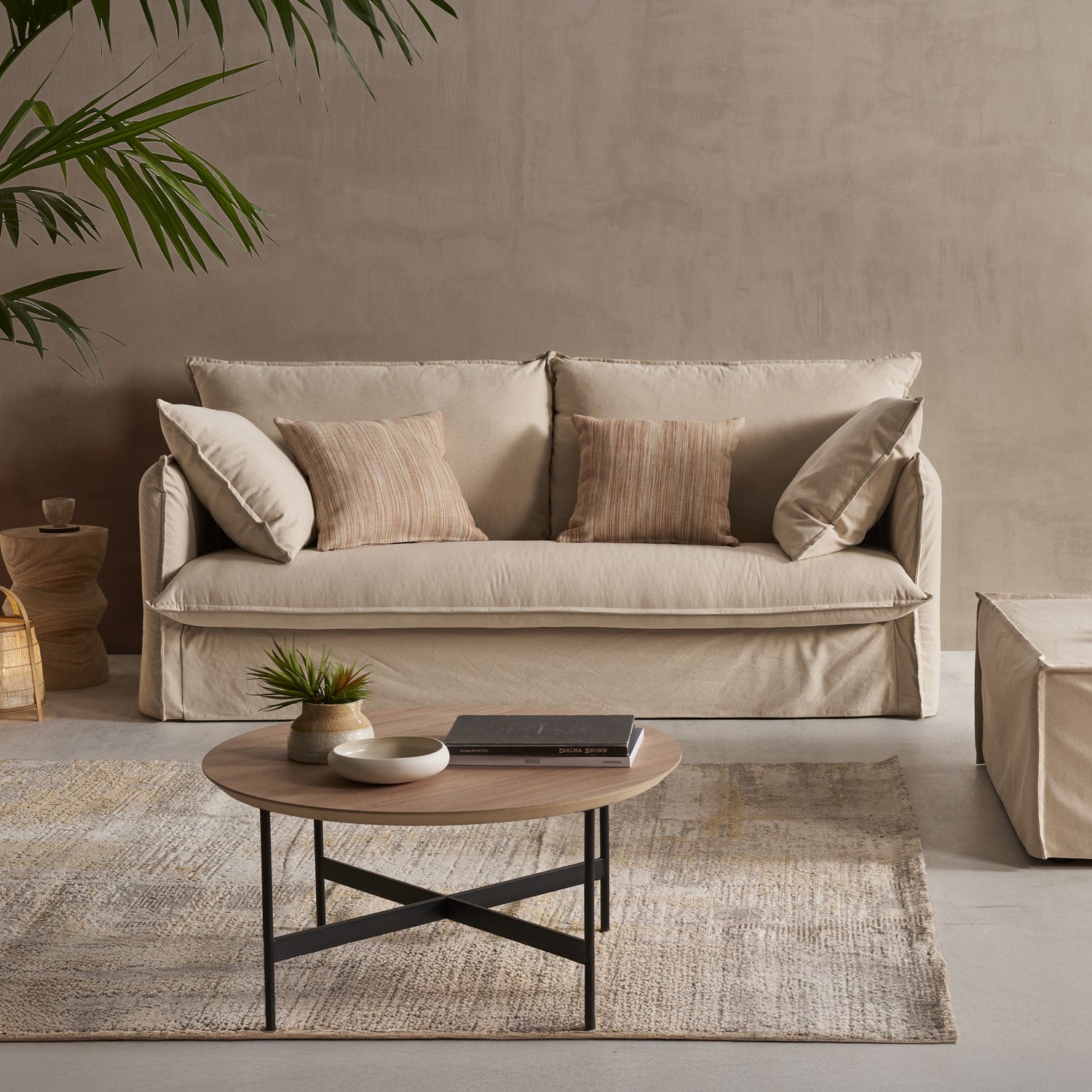
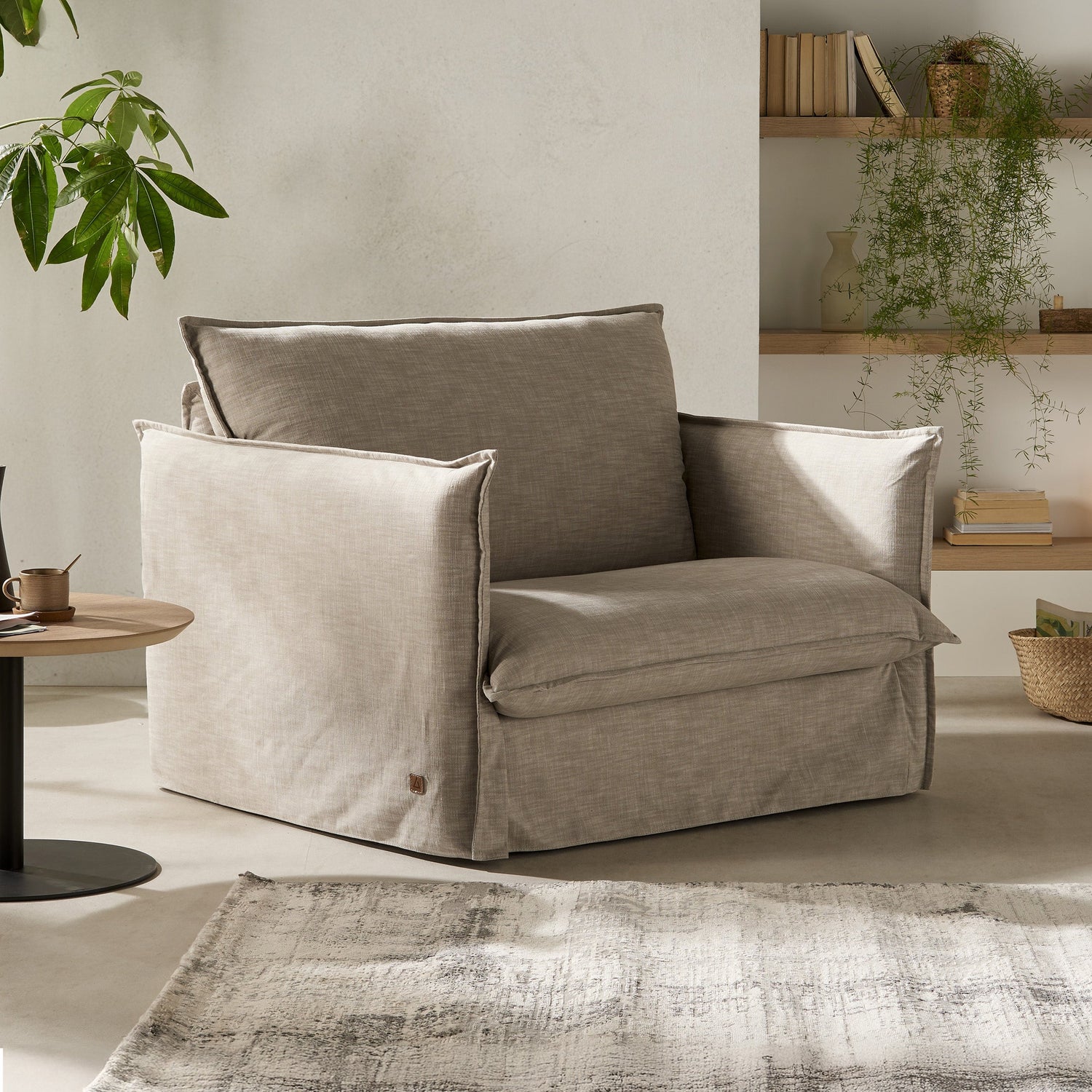
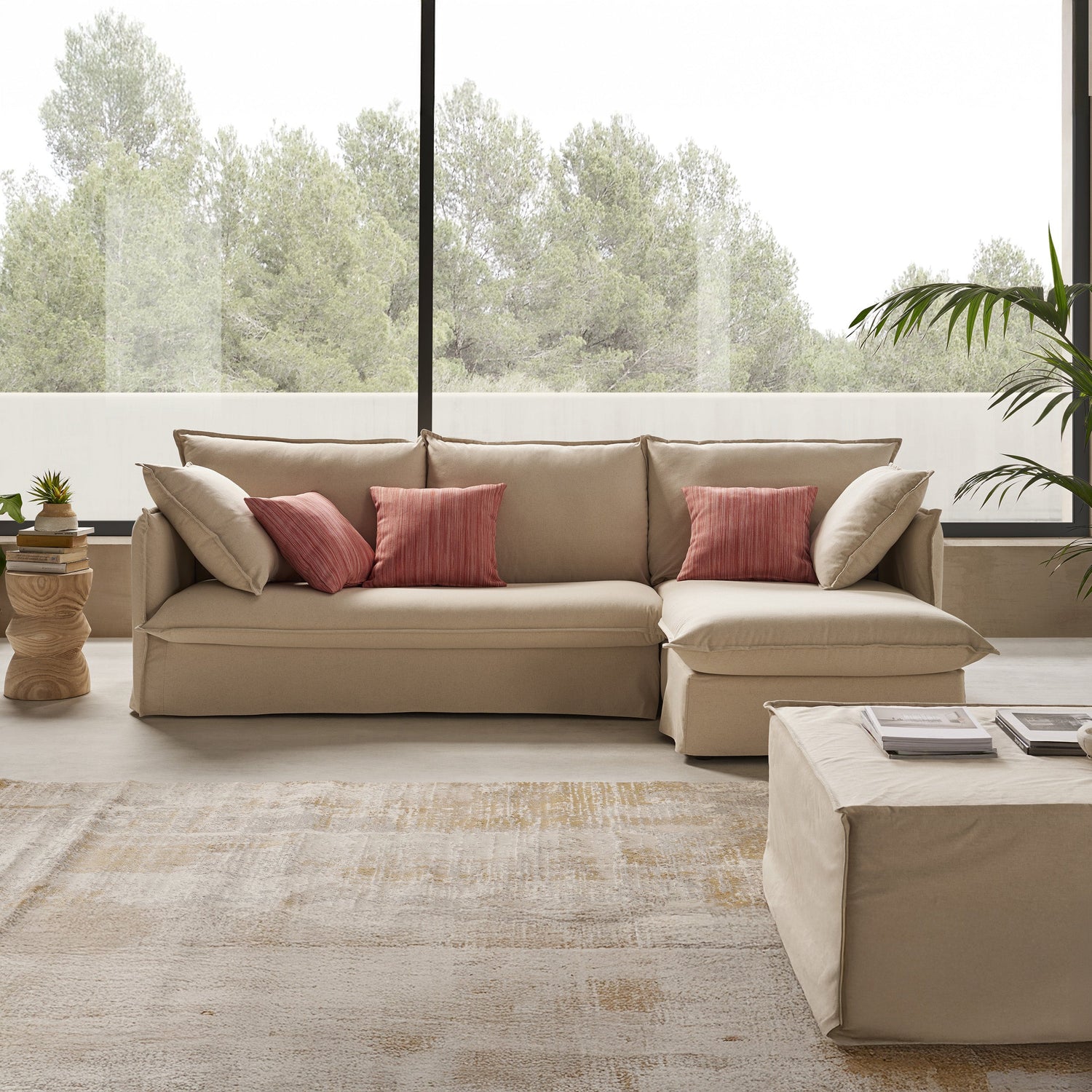
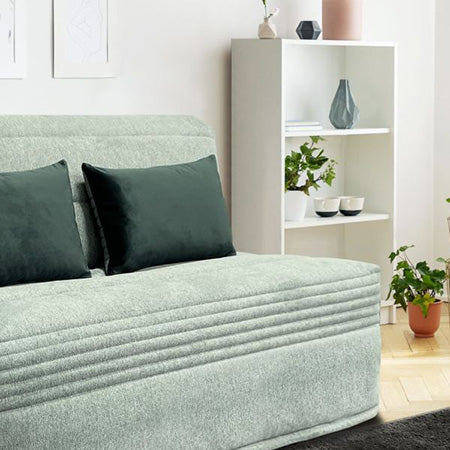
Both warm, elegant, and functional, the beige convertible corner sofa offers many advantages for furnishing your living room. Its corner configuration provides generous seating, while its convertible function allows for an extra bed when needed.
As for beige, it brings brightness and softness to the room while easily coordinating with many decor styles. Here's how to choose and integrate a beige convertible corner sofa into your home.
Why choose a beige convertible corner sofa?
First, the corner sofa allows you to enjoy comfortable seating. Its chaise longue invites relaxation and also visually structures the living room.
In its convertible version, it offers an additional functionality: the sofa can transform into a bed to accommodate guests or provide more regular sleeping arrangements, depending on the mechanism and the mattress chosen.
The convertible corner sofa thus allows you to combine several uses in one piece of furniture, without cluttering the room with multiple pieces.

Beige, a color easy to integrate into the living room
Timeless and bright, beige remains a safe bet in interior decoration. Warmer than white and particularly easy to combine, it helps create a soft and welcoming atmosphere.
A beige corner sofa can be paired with:
- light wood for a natural ambiance;
- materials like linen, rattan, or wool to enhance the cozy feel;
- terracotta, khaki, or brown to add more character;
- black or dark wood to create a more contemporary interior.
This neutral shade also allows for easy evolution of your decor with trends by simply changing cushions, rugs, or accessories.
What upholstery to choose for your beige corner sofa?
The upholstery plays an important role in the final look of the sofa. On a beige model, each material allows for creating a different atmosphere.
Bouclé, for example, offers a soft and enveloping look particularly suited to warm interiors. Velvet provides a more sophisticated finish, while a textured fabric or tweed can add more relief to the sofa.
Beyond style, also consider choosing your fabric based on your daily life and ease of maintenance.
How to choose your beige convertible corner sofa?
Before choosing your sofa, start by accurately measuring the available space. A corner sofa naturally takes up more space than a straight sofa and must allow for pleasant circulation around the furniture.
Several elements should then be considered:
- the dimensions of the sofa, open and closed;
- the orientation of the corner, right or left;
- the number of seats;
- the comfort of the seat and backrests;
- the opening mechanism;
- the type and thickness of the mattress;
- the upholstery and its maintenance.
It is also essential to anticipate the necessary space when the bed is unfolded.

What sleeping option to choose for a convertible corner sofa?
Not all convertible sofas serve the same purpose. If the sleeping area is mainly used for occasional guests, a mattress intended for an occasional bed may suffice.
For more regular use, it is preferable to opt for a convertible sofa equipped with a mattress suitable for more frequent use.
The opening mechanism is also important. A simple and quick system makes it easier to switch from the living room to the sleeping area, especially when the sofa is regularly used as a bed.
How to place a beige corner sofa in your living room?
Contrary to popular belief, a corner sofa does not necessarily have to be placed against two walls.
In a large open room, it can naturally delineate the living room and create a separation from the dining room or kitchen. In a more restricted space, placing it against a wall allows for better circulation.
Before installation, also consider the bed's deployment. A light or easy-to-move coffee table can be particularly practical with a convertible corner sofa.
How to decorate around a beige corner sofa?
Beige provides an excellent base for personalizing your interior. To avoid an overly uniform result, the ideal is to play with materials, shades, and volumes.
A textured rug can define the living room space, while a few cushions in natural, brown, green, or terracotta tones can add contrast.
Wooden elements and a few botanical touches easily complete the ensemble to create a warm and harmonious living room.
Beige convertible corner sofa: a choice as aesthetic as it is practical
The beige convertible corner sofa meets several needs at once: enjoying generous seating, furnishing a welcoming living room, and having an extra bed.
Its bright and timeless color allows it to transcend trends and integrate into many decorative universes. To find the ideal model, it is essential to consider the room's dimensions, the desired comfort, and especially the frequency of bed use.